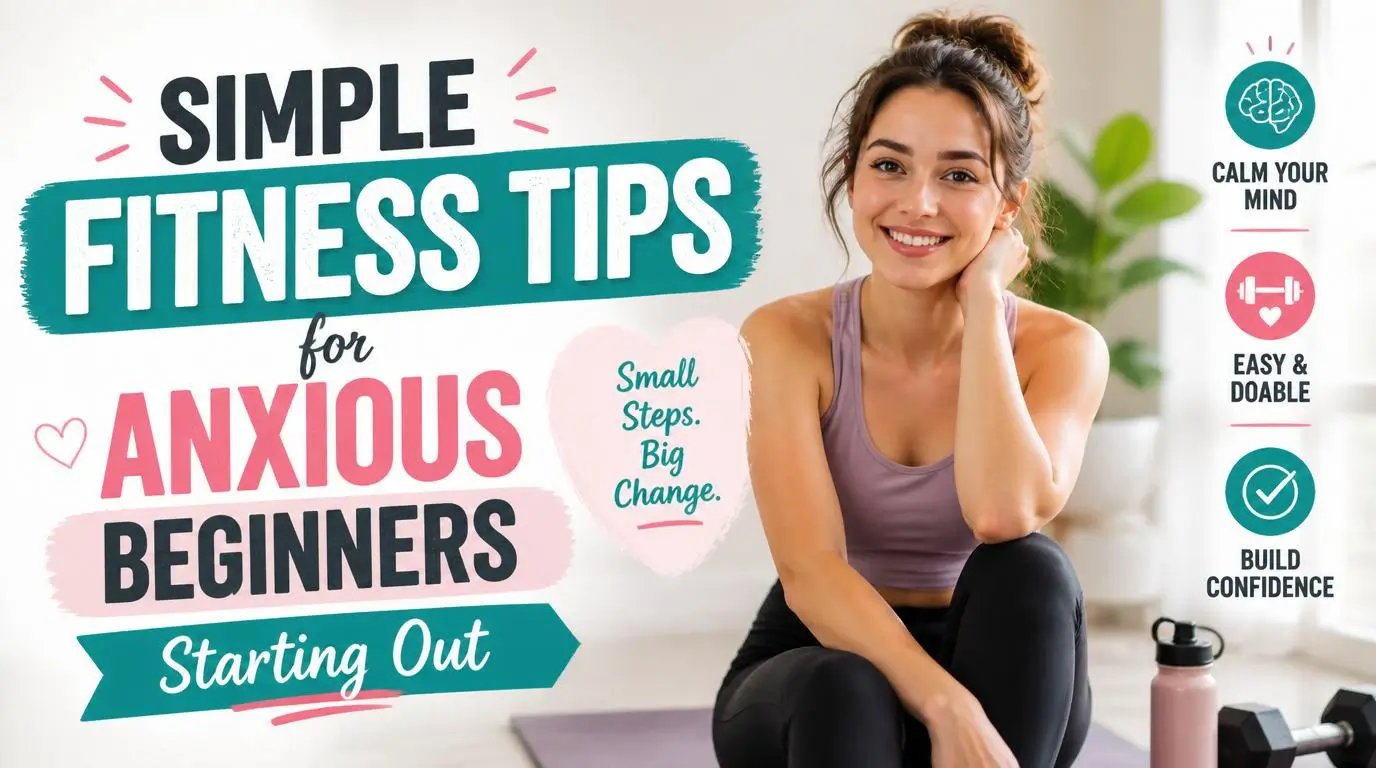
If you’ve ever stood outside a gym, heart pounding, and then just driven home, you’re my people. These simple fitness tips for anxious beginners starting out come from years of being that person who wanted to get moving but felt paralyzed by the thought of doing it wrong, looking stupid, or failing publicly. The anxiety is real. But so is getting past it. I did, and it wasn’t through some dramatic overnight shift.
1. Accept That Anxiety Is Part of the Process, Not a Barrier
Your brain will tell you to wait until you feel “ready.” That day never comes. Anxiety doesn’t magically disappear before your first workout. It shows up, sits next to you, and you move anyway.
I spent months telling myself I’d start on Monday. Then the next Monday. Then January. What finally worked was accepting that feeling nervous didn’t mean I shouldn’t go. It just meant the experience was new. New things feel uncomfortable. That’s biology, not a sign you’re broken. Give yourself permission to feel weird about it and still show up. Even if showing up means a 10-minute walk around the block in your oldest sneakers.
2. Start So Small It Feels Almost Silly
The biggest mistake anxious beginners make is trying to do too much on day one. You don’t need a 60-minute program. You need something so manageable that your brain can’t talk you out of it.
My first “workout” was a seven-minute stretching routine on YouTube. That’s it. I did it in my living room wearing pajama pants. Nobody saw me. Nobody judged me. And the next day, I did it again. Consistency beats intensity every single time when you’re just starting out. Think five-minute walks, a single set of bodyweight squats, or a gentle yoga flow. Build the habit first. The intensity can come later, once your nervous system stops treating exercise like a threat.
3. Pick a Space Where You Feel Safe
Crowded gyms with mirrors everywhere and people grunting through deadlifts? That’s not where most anxious beginners thrive. And that’s completely fine.
I started at home. No equipment, no audience, just me and my phone propped up against a water bottle playing a beginner video. Apps like Nike Training Club and YouTube channels like Yoga With Adriene became my unofficial coaches. When I eventually wanted more structure, I chose a small studio with a 6 a.m. class that only had about eight people in it. The point is, your environment matters. If a space makes your anxiety spike, that space isn’t serving you right now. Find one that does. You can always graduate to the big box gym later, or never. There are no rules here.
4. Wear Whatever You Already Own
Fitness marketing wants you to believe you need matching leggings, specific shoes, and a branded water bottle before you can take a single step. You don’t. Wearing old basketball shorts and a faded t-shirt is perfectly fine.
I remember scrolling through workout gear online, convincing myself I needed the “right” outfit before starting. That was just another delay tactic dressed up as preparation. Wear something comfortable that lets you move. That’s the only requirement. Once you’ve been at it for a few weeks and genuinely want new gear, go for it. But don’t let the lack of a $90 sports bra stop you from doing a walk today.
5. Stop Comparing Your Day One to Someone Else’s Day 500
Social media fitness content is a highlight reel. That person doing flawless burpees with a smile? They probably cried during their first workout too. Or maybe they didn’t, but their journey has nothing to do with yours.
I used to watch fitness influencers and feel worse about myself, not better. So I unfollowed most of them. Instead, I followed accounts that showed real bodies, real struggles, and real starting points. FYI, the algorithm feeds you more of what you engage with, so actively liking and saving beginner-friendly content will reshape your feed fast. Your only competition is the version of you that stayed on the couch yesterday.
6. Use the “Two-Minute Rule” on Hard Days
Some days the anxiety wins before your feet even hit the floor. On those days, commit to just two minutes. Seriously. Two minutes of movement, and then you’re allowed to stop.
Here’s the trick: most of the time, once you start, you keep going. The hardest part is the transition from “not doing it” to “doing it.” Two minutes gets you past that wall.
And on the days when you actually do stop at two minutes? That still counts. You still moved. You still chose yourself over the anxiety. I’ve had weeks where every session was barely five minutes, and those weeks still mattered because I didn’t break the streak.
7. Try Walking Before Anything Else
Walking is wildly underrated. It requires zero skill, zero equipment, and zero courage to start. You already know how to do it. And the mental health benefits are backed by a mountain of research.
Before I ever touched a dumbbell, I walked. Fifteen minutes around my neighborhood with headphones in, listening to a podcast. It didn’t feel like “exercise” in the intimidating sense, which is exactly why it worked. Walking lowered my baseline anxiety enough that I eventually felt ready to try other things.
If someone asked me for simple fitness tips for anxious beginners starting out, walking would be the very first thing I’d recommend. It’s gentle, effective, and you can do it right now without Googling a single tutorial.
8. Find One Routine and Stick With It for at Least Three Weeks
Decision fatigue is real, and it feeds anxiety. If you spend 30 minutes every day trying to decide what workout to do, you’ll exhaust yourself before you even start. Pick one routine and repeat it.
I used the same 20-minute beginner strength video from the Fitness Blender YouTube channel for nearly a month straight. Was it optimal? Probably not. But it removed the decision. I woke up, pressed play, and moved. That predictability calmed my nervous system because my body knew what was coming. No surprises. No wondering if I could handle it. After three weeks, the routine felt easy, and that feeling of mastery gave me the confidence to try something new.
9. Tell One Person What You’re Doing
Accountability doesn’t have to mean hiring a trainer or joining a group challenge. It can be as simple as texting your best friend, “Hey, I’m trying to walk for 15 minutes every day this week.”
When I told my partner what I was doing, something shifted. It wasn’t pressure. It was support. On days I wanted to skip, a simple “Did you do your walk today?” was enough to nudge me out the door. You don’t need to announce it on social media. Just one person who knows and gently checks in can make the difference between quitting on day four and making it to day thirty. Choose someone kind, not someone who’ll turn it into a competition.
10. Track How You Feel, Not How You Look
Forget the scale. Forget progress photos, at least for now. Instead, write down how you feel after each session. Three words is enough.
My notes from the first month looked like this: “Less tense. Slept better. Calmer.” That data mattered more to me than any number on a scale because it proved that movement was helping my anxiety, which was my whole reason for starting.
The physical changes came eventually, but the mental shift happened almost immediately. When you track feelings, you build a personal case for why this is worth continuing. That emotional evidence becomes your best motivator on the days when anxiety tells you to quit.
11. Give Yourself Permission to Quit a Workout Early
Not every workout needs to be finished. If you’re 10 minutes into a 30-minute session and your anxiety is through the roof, stop. You didn’t fail. You showed up, and that’s the part that matters most right now.
I’ve walked out of group classes halfway through. I’ve closed YouTube videos at the 12-minute mark. And every single time, I still felt better than if I’d done nothing. The all-or-nothing mindset is what keeps anxious beginners stuck. It tells you that a partial workout is worthless. That’s a lie. A partial workout is proof that you tried, and trying is the entire foundation you’re building on.
12. Remember That Rest Days Are Not Lazy Days
Rest isn’t the opposite of progress. It’s part of it. Your muscles literally grow during recovery, not during the workout itself.
Taking a rest day used to make me feel guilty, like I was already failing. But rest days prevented burnout and kept my anxiety from associating exercise with exhaustion. I now take two full rest days per week, and I’m in better shape than when I tried to push through seven days straight. IMO, rest is the most overlooked simple fitness tip for anxious beginners starting out. Your body and your brain both need time to process what you’re asking of them.
Frequently Asked Questions
What’s the best type of exercise for someone with anxiety?
Walking and yoga consistently rank highest for anxiety relief, and both are extremely beginner-friendly. I started with walking because it felt natural and required no learning curve. Yoga came next because the breathing focus calmed my nervous system in a way running never did. Try both and see what your body responds to.
How often should an anxious beginner exercise each week?
Three to four days a week is a great starting point. That gives you enough frequency to build a habit without overwhelming your schedule or your mental energy. I started with three days and slowly added a fourth after about six weeks. The goal is sustainability, not perfection.
Can you get fit working out at home without equipment?
Absolutely. Bodyweight exercises like squats, push-ups, lunges, and planks build real strength. I spent my entire first year training at home with zero equipment, and I saw genuine results. Channels like Fitness Blender and DAREBEE offer hundreds of free routines designed for exactly this.
What if I feel too anxious to even start with simple fitness tips for anxious beginners?
Start with one deep breath, then one stretch. That’s your workout for today. Anxiety makes everything feel monumental, so shrink the task until it feels almost trivial. Tomorrow, add one more minute. The key is proving to your brain that movement is safe, and you do that through tiny, repeated exposures.
Should I tell my therapist I’m starting to exercise?
Yes, if you have one. Exercise affects your mood, sleep, and stress hormones, all things your therapist is tracking. Mine actually adjusted some of my coping strategies once I started moving regularly because the exercise was doing part of the heavy lifting. It’s useful context for your care team to have.
Conclusion
Starting a fitness routine with anxiety isn’t about willpower or motivation. It’s about making the barrier to entry so low that your anxious brain can’t build a convincing argument against it. You already have everything you need to begin, and beginning is the hardest part you’ll ever do. So what’s your version of “small enough to actually do today”?