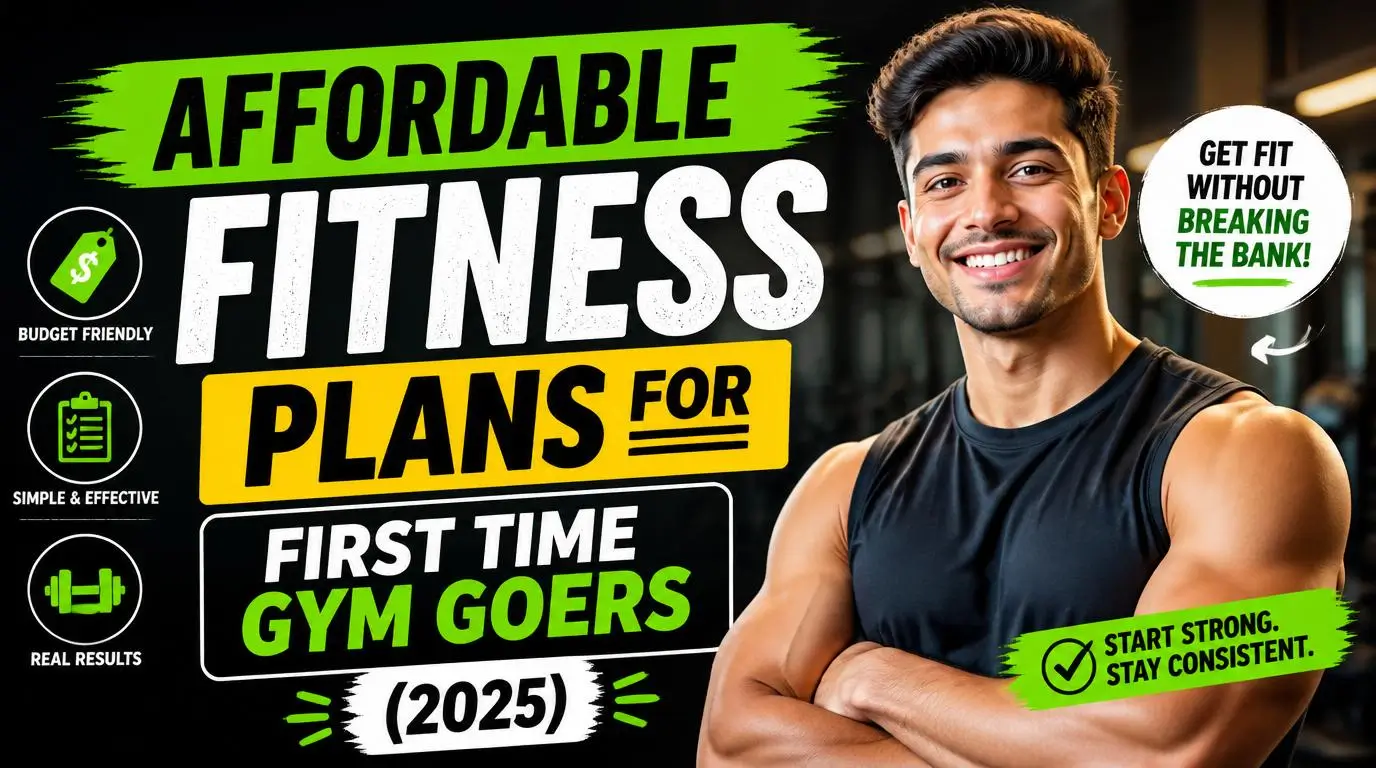
Finding affordable fitness plans for first time gym goers felt impossible when I first started. Every app wanted $30 a month, every trainer charged $80 a session, and every “beginner” program assumed I already knew what a Romanian deadlift was. I walked into my first gym wearing basketball shorts and zero confidence. But after two years of trial, error, and way too many wasted subscriptions, I figured out what actually works on a tight budget. This is everything I wish someone had told me on day one.
Why Most Beginners Overspend on Fitness (And How to Avoid It)
The fitness industry makes its money off confusion. When you feel overwhelmed, you spend more. A personal trainer package here, a premium app there, overpriced protein powder everywhere. I dropped close to $400 in my first two months on stuff I absolutely did not need.
Here’s the truth: a solid beginner routine doesn’t require expensive coaching or boutique gym memberships. You need a basic plan, consistency, and enough knowledge to not hurt yourself. That’s it. The good news is that almost all of that is available for free or dirt cheap in 2025.
The biggest mistake I made was thinking more money meant faster results. It doesn’t. The person following a free YouTube program three times a week will outpace the person who bought a $200 training plan and only shows up once. Your budget should go toward showing up, not showing off.
Step 1: Pick the Right Gym Membership Without Overpaying
Before you even think about a workout plan, you need somewhere to train. And the range of gym pricing is wild. You can pay $10 a month or $250 a month, and both places will have dumbbells.
For beginners, Planet Fitness and Crunch Fitness offer memberships starting around $10 to $15 per month. Both have enough equipment for any beginner program. I started at Planet Fitness, and while the “Lunk Alarm” thing is a little silly, the equipment was clean and the price was unbeatable.
If you live near a community recreation center, check their rates too. My local YMCA offered a sliding-scale membership based on income, and I’ve seen city-run gyms charge as little as $25 per month with full weight rooms and pools. Don’t overlook these.
One tip: avoid signing annual contracts if you can. Month-to-month costs slightly more but gives you flexibility. If the gym isn’t working out (pun intended), you can leave without eating a cancellation fee.
Step 2: Choose a Free or Low-Cost Workout Program
This is where affordable fitness plans for first time gym goers really come together. You do not need to pay for a program when you’re starting out. Seriously.
Here are programs I’ve personally used or recommended to friends who were brand new:
- Stronglifts 5×5 (free app): Three exercises per session, three days per week. It’s simple, progressive, and the app tells you exactly what to do. I ran this for my first four months and saw real strength gains.
- GZCLP (free spreadsheet): Slightly more structured than Stronglifts, with room to add accessory work. Great if you want a bit more variety after a few weeks.
- Muscle & Strength beginner programs (free on their website): They have several 3-day and 4-day splits designed specifically for people who have never touched a barbell.
If you prefer guided video workouts, the Nike Training Club app is completely free and has beginner-specific routines. Sydney Cummings on YouTube also posts full-length workouts daily at no cost.
Paid options worth considering if you want extra guidance: the Boostcamp app is free for most programs but offers a premium tier around $10 per month. Hevy is another solid free workout tracker that lets you log sets and follow community programs.
Step 3: Learn Proper Form Before Adding Weight
I cannot stress this enough. I tweaked my lower back three weeks in because I loaded up a barbell squat without learning how to brace my core. That cost me two weeks of recovery and a $40 copay at urgent care. Not exactly budget-friendly.
Spend your first week or two using light weights or even just the empty barbell. Watch form videos from trusted creators. Jeff Nippard, Alan Thrall, and Squat University on YouTube all break down the main compound lifts clearly and accurately. Their content is free, evidence-based, and never tries to sell you snake oil.
Most gyms also offer one free personal training session when you sign up. Take it. Use that session specifically to have someone watch your squat, bench press, and deadlift form. You’re not committing to a package. You’re getting a free form check. That single session can save you months of frustration and potential injury.
If your gym doesn’t offer a free session, film yourself on your phone from the side and compare your movement to the tutorial videos. It’s not perfect, but it works surprisingly well.
Step 4: Handle Nutrition Without Expensive Supplements
New gym goers get targeted hard by supplement companies. Creatine, pre-workout, BCAAs, mass gainers, fat burners. The list is endless and so is the marketing.
Here’s what you actually need as a beginner: enough protein and enough total calories. That’s basically it. You don’t need a $50 tub of protein powder to hit your protein goals. Eggs, chicken thighs, Greek yogurt, canned tuna, cottage cheese, and beans are all cheap and loaded with protein. I meal-prepped chicken thighs and rice for about $3 per meal when I started.
The one supplement I do think is worth buying is creatine monohydrate. It’s one of the most researched supplements in existence, it works, and a six-month supply of plain creatine monohydrate from brands like BulkSupplements or Nutricost costs around $15 to $20. Skip the flavored, branded versions. They’re the same thing at triple the price.
For tracking what you eat, MyFitnessPal has a free version that does everything a beginner needs. You don’t have to track forever, but doing it for a few weeks teaches you what’s actually in your food. That knowledge sticks with you.
Step 5: Build a Realistic Schedule You’ll Actually Follow
The best plan in the world means nothing if you quit after two weeks. And most beginners quit because they go too hard, too fast.
Three days per week is plenty. Monday, Wednesday, Friday. Or Tuesday, Thursday, Saturday. Whatever fits your life. Full-body routines work incredibly well for beginners because you hit every muscle group multiple times per week without spending six days in the gym.
Each session should take 45 minutes to an hour. If you’re spending 90 minutes in the gym as a beginner, you’re probably resting too long between sets or doing too many exercises. Keep it tight. Get in, do your work, leave.
I also set a non-negotiable rule for myself: even on days I felt terrible, I would at least drive to the gym parking lot. Nine times out of ten, once I was there, I went inside. That silly little trick kept me consistent during the first three months when motivation was basically nonexistent.
Step 6: Track Your Progress Without Paying for Premium Apps
Progress tracking keeps you motivated and honest. But you don’t need a $15/month app to do it.
A simple notes app on your phone works fine. Write the date, the exercises, the weight, and the reps. That’s it. I used Google Sheets for my first six months and it was completely free and easy to review.
If you want something more polished, Hevy and Strong both have free tiers that let you log workouts and see your progression over time. Strong limits you to a certain number of saved routines on the free plan, but for a beginner running one program, that’s more than enough.
Take progress photos once a month. Front, side, and back, in the same lighting, same spot, same time of day. The scale lies constantly, especially in the first few months when you’re building muscle and losing fat simultaneously. Photos don’t lie.
Common Mistakes That Cost Beginners Money
Some expensive mistakes are obvious. Others sneak up on you.
Buying workout clothes you don’t need is a big one. You don’t need matching gym sets or $120 running shoes for weight training. A basic pair of flat-soled shoes (Chuck Taylors work great for lifting) and whatever comfortable clothes you already own will get you through your first several months easily.
Hopping between programs every two weeks is another. Consistency with one plan for 8 to 12 weeks will always beat switching programs every time you see a new influencer post. Stick with it long enough to actually see results before changing anything.
Paying for online coaching too early can also drain your wallet. Coaching is valuable, but most beginners don’t need it yet. A free program with good form videos covers 90% of what you need in your first six months. Save the coaching budget for when you’ve built a base and have specific goals you can’t figure out alone.
Frequently Asked Questions
How much should a first time gym goer spend per month on fitness?
Honestly, $10 to $30 covers most people. A budget gym membership runs $10 to $15, and you can find quality programs for free. Add creatine and basic food prep and you’re looking at very manageable costs. You don’t need premium anything when you’re just starting out.
Are free workout programs actually good enough for beginners?
Absolutely. Programs like Stronglifts 5×5 and GZCLP have helped thousands of people build real strength. They’re designed by experienced lifters and backed by solid training principles. Paying for a program doesn’t make it better. The best program is one you follow consistently.
What’s the best affordable fitness plan for first time gym goers who feel intimidated?
Start with a simple three-day full-body routine and pair it with YouTube form tutorials. Apps like Nike Training Club and Boostcamp guide you through each session. Feeling intimidated is completely normal. Almost everyone in the gym felt the same way on their first day, even the big dudes in the corner.
Do I need a personal trainer as a complete beginner?
Not necessarily. Use the free introductory session most gyms offer to learn basic form. After that, free resources from credible YouTube channels can fill the gaps. If you have a specific injury or health concern, then yes, investing in a few trainer sessions makes sense. Otherwise, save that money.
How long before I start seeing results on a budget plan?
Most beginners notice strength improvements within two to three weeks. Visible physical changes usually take six to eight weeks with consistent training and decent nutrition. Budget plans produce the same results as expensive ones because the results come from effort and consistency, not price tags.
Conclusion
Getting fit for the first time doesn’t have to wreck your bank account. A cheap gym membership, a free program, some chicken thighs, and the willingness to show up three days a week will take you further than any premium subscription ever could. What’s the one thing holding you back from starting this week?